Horstman is a journey through art, design, and culture, meeting the people whose work, homes, and habits shape the world.
Items of Note
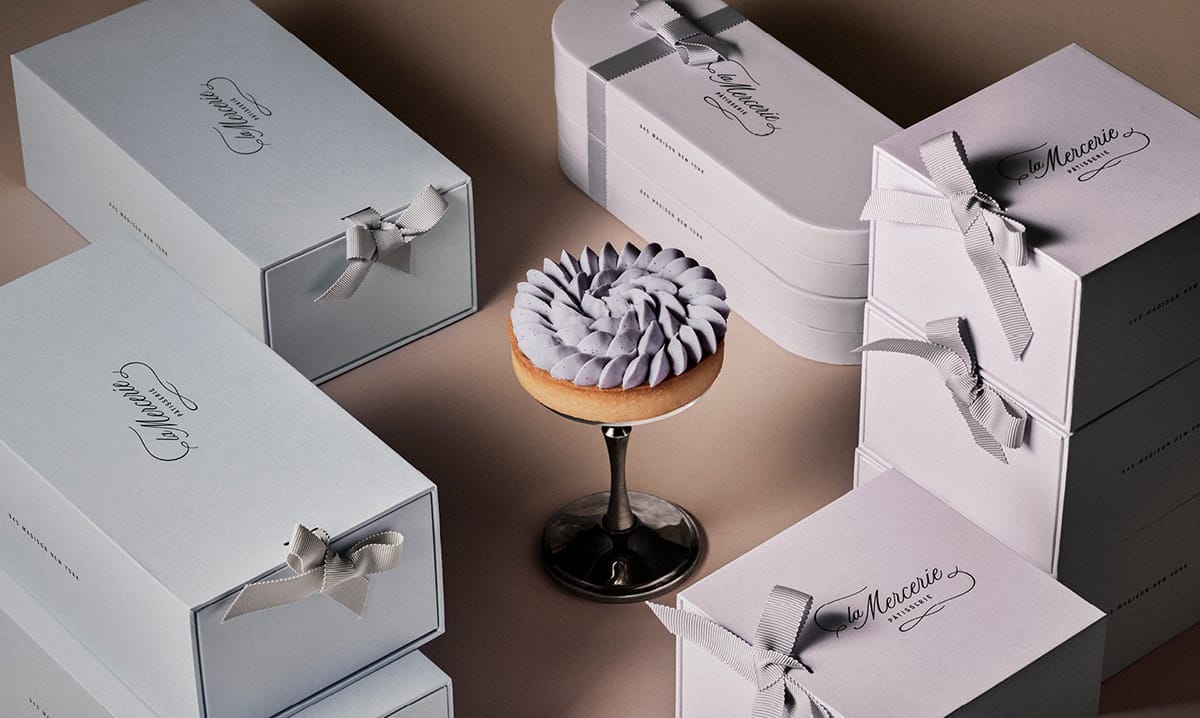
I first visited the chic, Soho French bistro La Mercerie around the Spring of 2018, about six months after it opened. I was only aware of it because I was obsessed with the restaurants creators Roman & Williams, after buying their book Things We Made. Roman & Williams is made up of Stephen Alesch and Robin Standefer (and obviously, a larger team of very talented people), who in 2002 opened as a “multidisciplinary architecture and design studio focused on creating buildings and interiors rooted in a modern paradigm of craftsmanship and history.” They were on a tear at the time, having completed the Ace Hotel New York in 2009, High Line Hotel in Chelsea in 2013, and restaurant Le Coucou in 2016, amongst other notable projects. For me, they symbolize everything that was, and still is, possible in interior design, crafting spaces and worlds that make time stop.
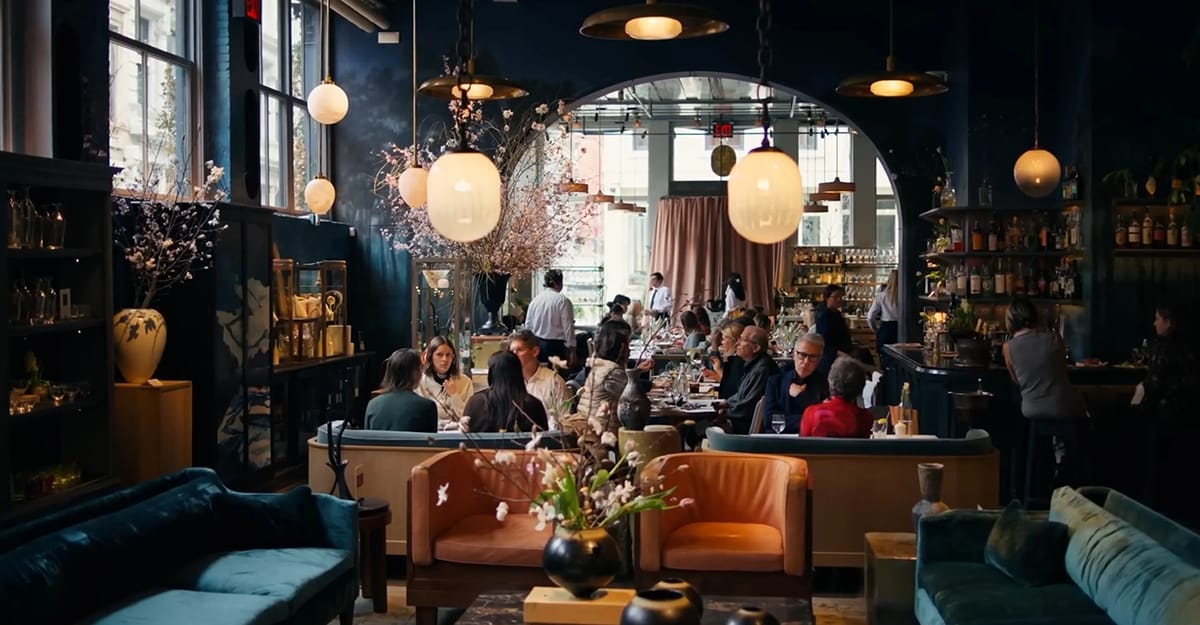
This is partly due to their past lives working in the film industry. You may have heard of a little film called Zoolander, where they were central members for the art department, working as production designers and art directors, who literally shaped the world you see on film. About the experience, Stephen describes it quite simply. “I think we always think of the camera—your eye, the first reveal. You know, you have to have that impact whether you walk into a house, you walk into a restaurant, you walk into a hotel; that first powerful impact establishing shot.”
I think this kind of polymath, do-it all approach to creative is why they’ve been so successful in their endeavors, both for others and in their personal projects. They have a dearth of knowledge and a seemingly bottomless well of creative drive that allows them to conjure whatever they dream of. Everything in their worlds has a true tactility, you can walk into their spaces and they want you to get cozy, and forget the time passing. They want to build spaces that age and become lived-in.
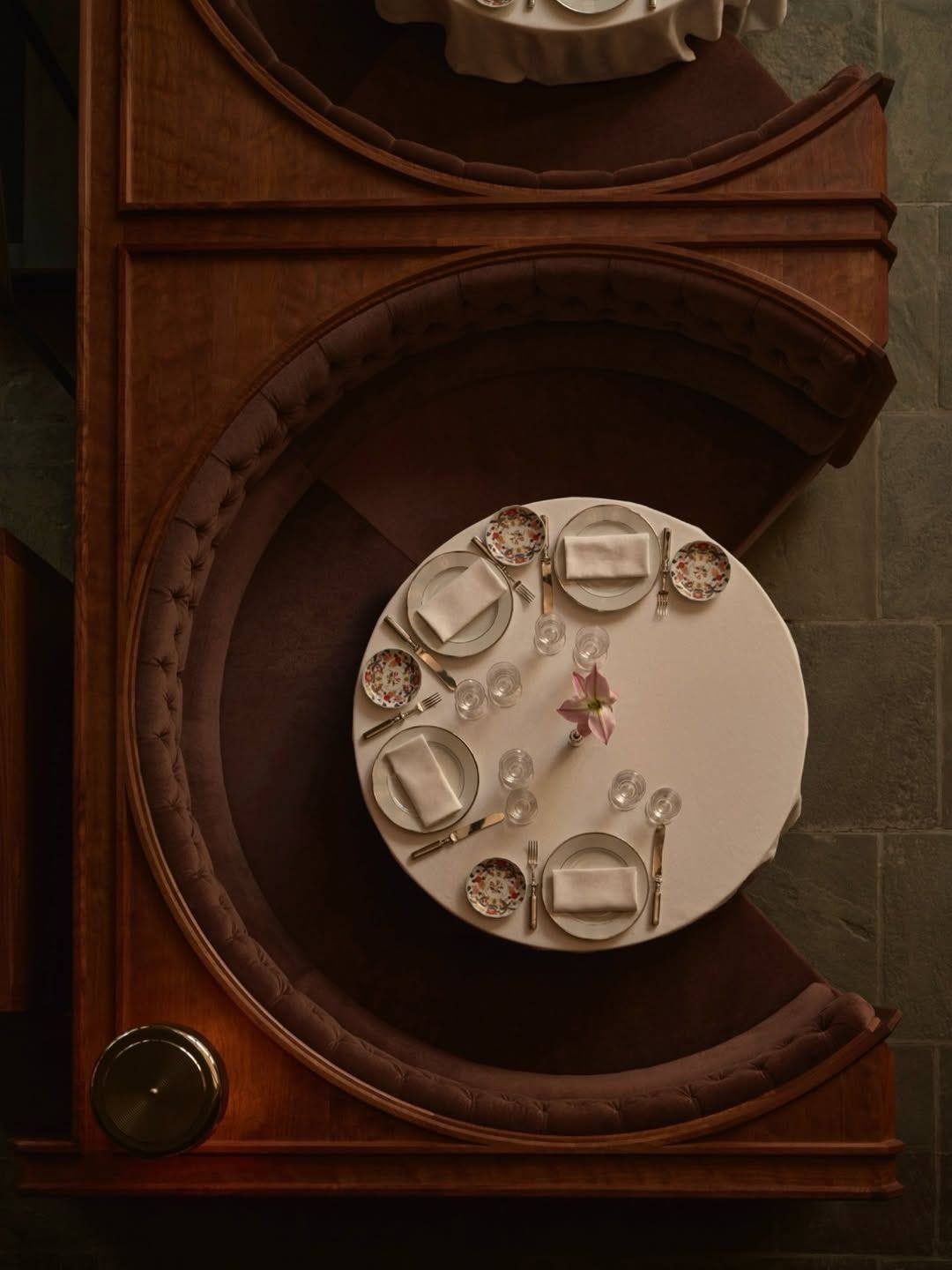
The next chapter of their story unfolds with two exciting openings. Housed in Marcel Breuer’s 1966 Brutalist landmark at 945 Madison Avenue, the former Whitney Museum building on the Upper East Side, Sotheby’s is turning the art world icon into a hybrid of gallery and salon. Inside, Roman & Williams are opening Marcel, a warm, 1960s inspired French restaurant on the building’s lower level, and La Mercerie Patisserie, a Viennese and Parisian‑inspired café and bakery tucked within the restaurant, overlooking the Breuer’s sculptural concrete courtyard. Both open soon, Thursday, April 16 to be exact, so if you’re in New York, please pay a visit and let me know what you think. I will most certainly be stopping by during my trip to NY in August.


Over the past year I’ve been following the rise of Pane, a Chinese sneaker brand created by designer Chen Ning in 2022. The brands rise in popularity was built by focusing on stylish, low-profile trainers (GAT or German Army Trainer, if you’re like me and didn’t know the lingo), specifically gaining a ton of traction for their Light Training Nogi model. Ning based the brand around three design pillars: timelessness, motion, authenticity, wanting to create pieces that work for your everyday life. In an interview with Hypebeast, she mentioned how “modern consumers prioritize authenticity and enduring design over ephemeral trends,” which I is where we’re going to continue seeing smaller brands succeed, versus the Zara churn-and-burn model.
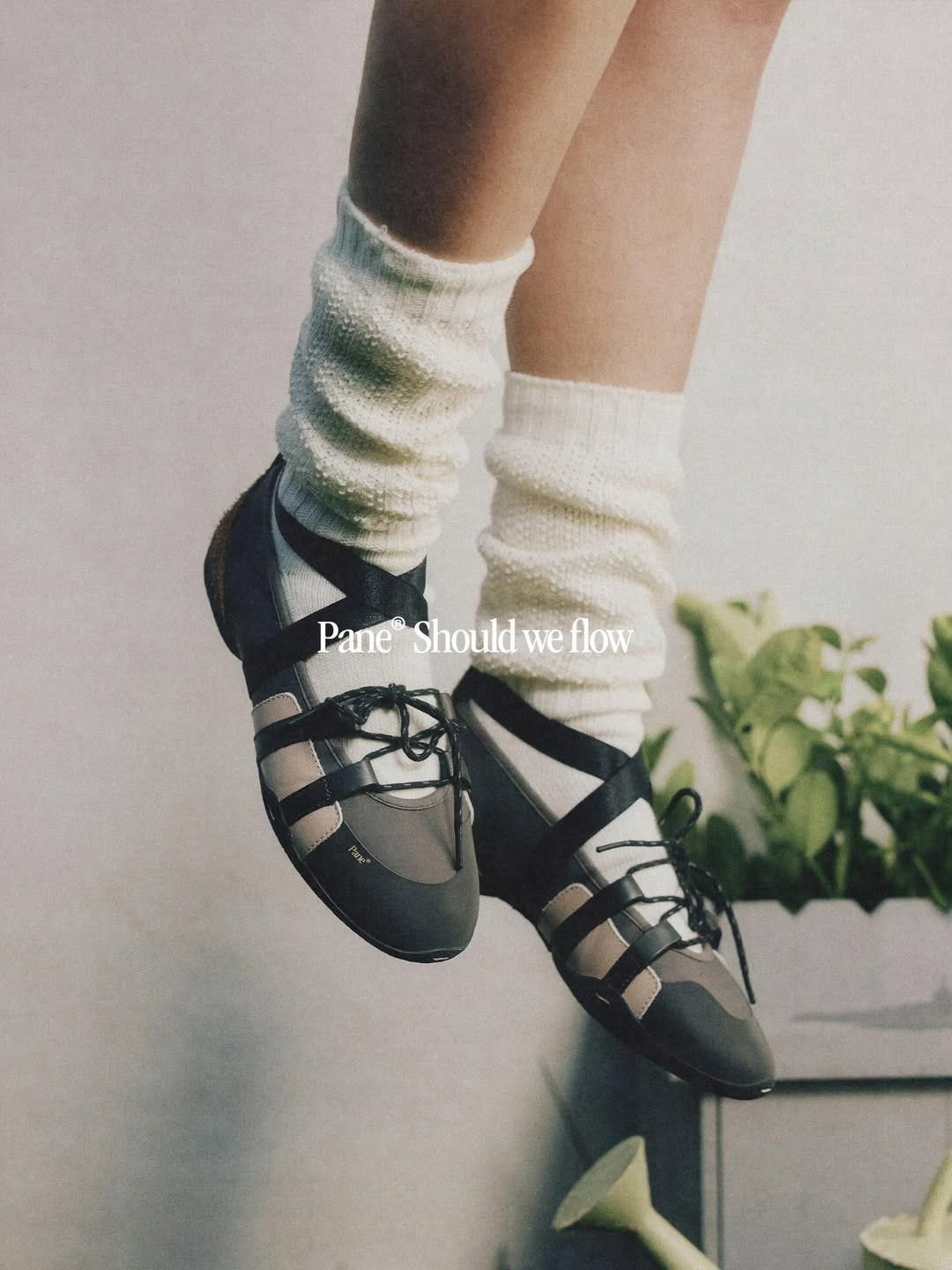
A couple of weeks ago they released the Aria, which looks as though Thom Browne designed an athletic trainer with the proportions and visual language of a ballet slipper. It’s one of the most inventive shoes I’ve ever seen. It’s an odd combination of things that shouldn’t work, but sometimes pushing things to a certain point takes them from bad all the way back around to amazing. It also must be noted that their photography and marketing is flawless, which is critical to stand out these days in a sea of same same social tactics, really focusing on lifestyle and how you can imagine yourself in a pair.
London-based architect Je Ahn has a history of creating work focused on how people live together and use shared spaces, much of which he has made through his practice, Studio Weave. I only recently came across his work from a fantastic project he created on the Isle of Wight, taking a concrete barn from the 1970s and transforming it into a retreat with an emphasis on friends spending time together, rather than people looking to hunker down away from the world.
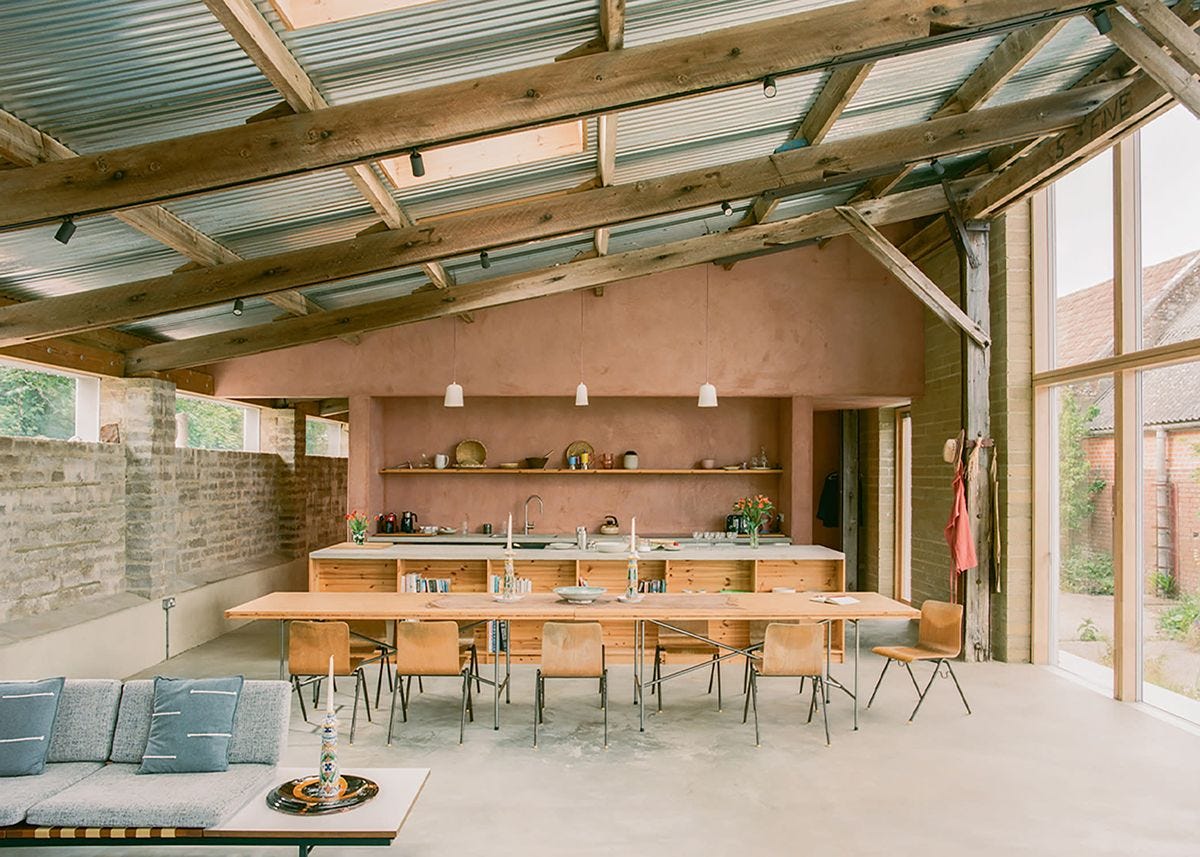


Ahn had been sailing to Cowes on the Isle of Wight for many years, and had spotted the old agricultural barn, seeing the potential in the space. He spent two and a half years to create a space that feels tactile and open, allowing all the surrounding farmlands to bring a pastoral sense to the environment. I’m not usually one for more minimal spaces though what appeals to me about this home is the unusual shapes and layouts that were informed by the previous structure.
I highly recommend watching the short film about the house which is beautifully shot by Divided by One. I appreciate that it highlights how you would live there, all gray and windy weather, and even how preparing a meal might feel.
For me personally, OlssønBarbieri is the most exciting creative studio doing work in the food, wine, and spirits space. Their approach is always playful and “out there” compared to a lot of the safe and mundane options businesses tend to err toward. They continue their reign with their work for Treblasé, rediscovering and reinterpreting a family’s heritage by relaunching their Genzianella recipe, an aperitif that was in need of a modern touch.
They worked closely with the owners, Simonetta and Luca of the Bosso family in Torino, and in going through their family photos, they found one from their trattoria that looked just like a painting by Fortunato Depero. It ended up being the key to the project, providing inspiration from the dynamism that the Futurism art movement represents.
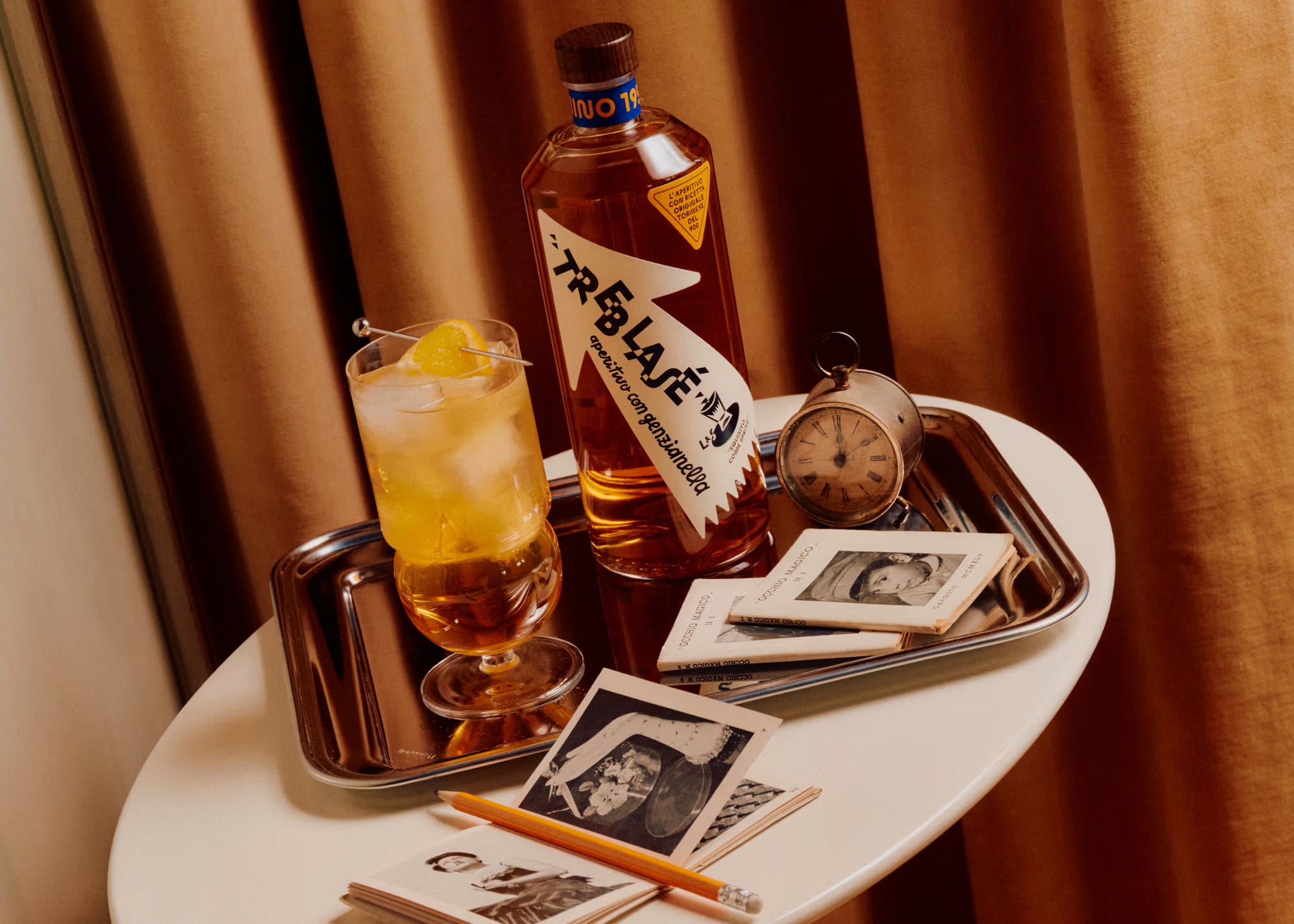
It’s impossible to not love the energy they’ve captured with this identity. The black and white arrow shaped label let’s the liqueur really shine and I love how the letters seem to be dancing together. The touches of blue (the color is inspired by the Genzianella, a deep blue alpine wildflower) and the little yellow label, which seems to caution you, saying, “prepare for a good time!” I implore you to check out the case study they put together because the added layer of movement makes this all the more fun.
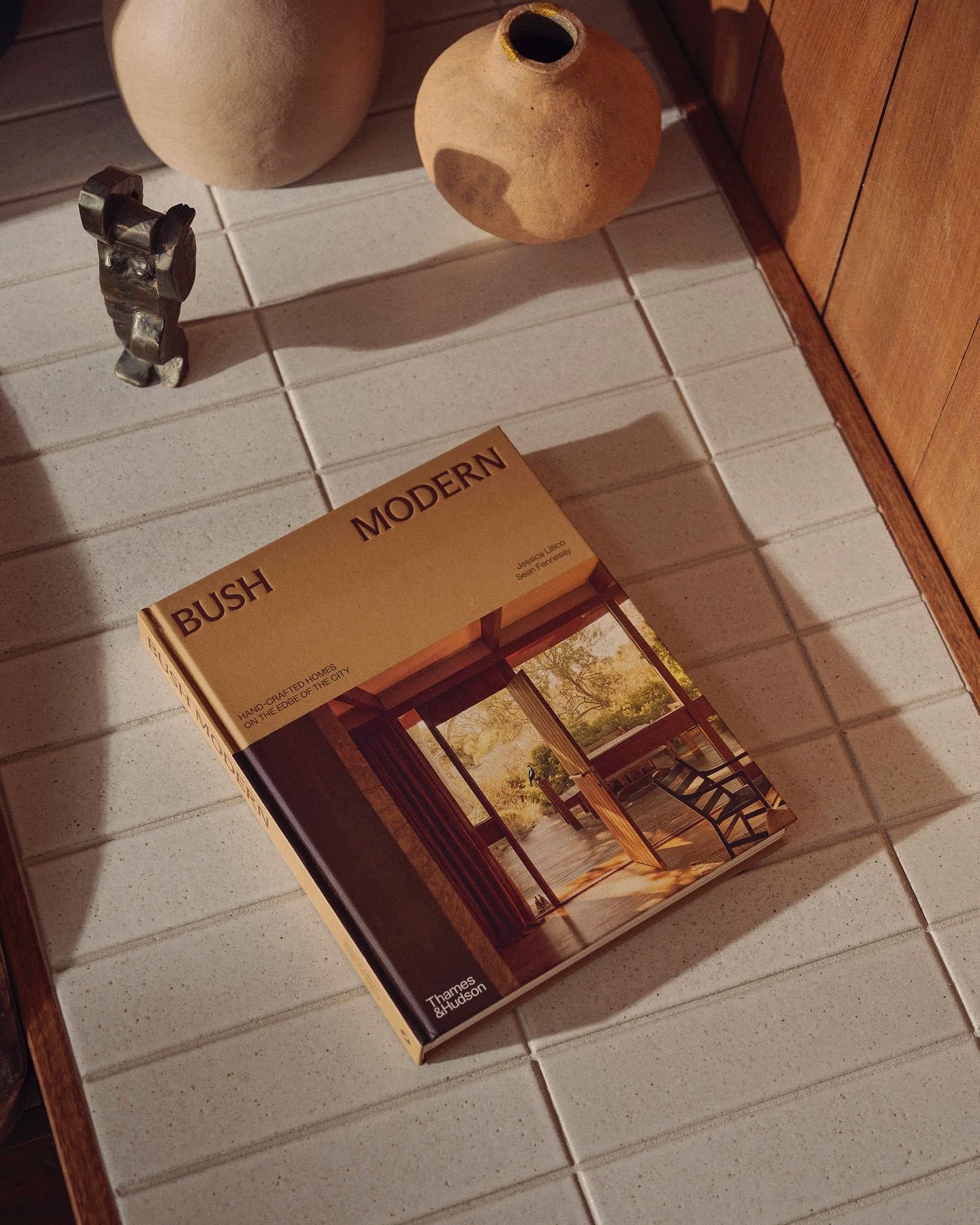
I came across this fascinating book, Bush Modern, that highlights 23 homes built in the bushy, semi‑rural suburbs on the north eastern edge of Melbourne, in areas where the city starts to thin out and meet the surrounding bushland. It reveals a little discussed chapter in Australian architecture where necessity and imagination shaped a movement. I didn’t realize until I saw this book that, for me, these are my dream homes.
The use of natural materials is particularly noteworthy, especially the various ways that woods are used throughout. Also interesting is how the homes are situated in the bush, almost nestled, like they are truly one with nature. Be sure to check out their Instagram to get a better sense of how special these homes are.
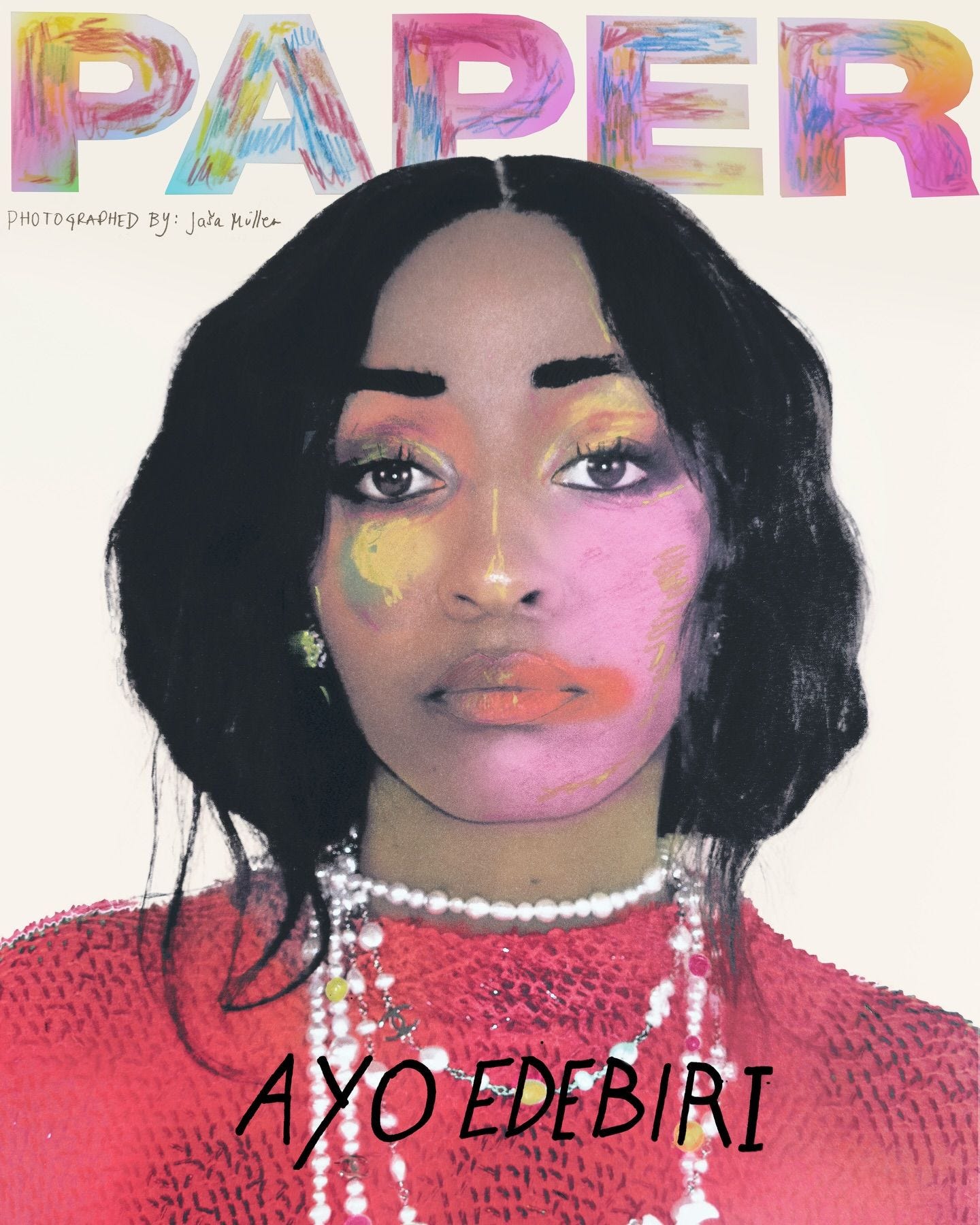
Calling back to what I wrote in February, we’re continuing to see a push in editorial creative that wants (needs?) to prove there was no AI involvement. The cover of Paper Magazine this month featured the always amazing Ayo Edebri shot by Slovenian photographer Jaša Müller. His style is referential to Andy Warhol in many ways, though I see a bit of comic book artist Bill Sienkiewicz, a pop art melange of photography and paints that feels very now. I love the color palette he uses, a soft mix of pastels with a primary use of warm tones and a strong use of black to give everything a beautiful contrast. It goes to show that real luxury is being defined by those with true talents, not a cluster of code counterfeiting the creativity of others.
Final Thought
“Be realistic: plan for a miracle.”
— Osho